

If you’ve spent time and money on your website and you’re still waiting for visitors to show up in meaningful numbers, you’re not alone. Wanting to increase website traffic is the easy part. Knowing which of the tactics floating around the internet will actually move the needle for your business is the hard part, especially when most guides on this topic are written for big marketing teams with dedicated budgets, not SME’s with a handful of people and a limited marketing spend.
This guide sets out a realistic guide to increasing your website traffic, including what to check first, which channels earn traffic quickly, which ones compound over time, and roughly when you should expect to see results.
Start With a Proper Audit, Not a Guess
Before you spend a load of time trying to increase website traffic, you should look to find out what’s actually happening on your site right now. Without a clear baseline, you’ve got no way of knowing whether your changes are working, or whether your visitor numbers were already drifting up or down anyway.
There are two useful free tools to get you started here, Google Search Console shows you which pages and keywords are already earning clicks, flags crawl errors, and tracks your Core Web Vitals scores (your website’s performance). Google Analytics (GA4) shows you where your visitors come from, what they do once they reach your site, and where they drop off. If neither is set up yet, that’s the first job on the list. Everything else in this guide is easier to judge once you can actually measure it.
Once you can see your current numbers, set a specific goal rather than a vague one. “More traffic” isn’t something you can act on. “10 more enquiries per month from organic search by Q3” is. If your site needs a comprehensive check up before you start the process then our website audit service will give you a clear, prioritised list of what to fix first.

Build Organic Traffic Through SEO
Organic search is the channel most UK SMEs should prioritise long term, because once a page ranks, it keeps bringing in visitors without you paying for every click. It takes longer to build than paid advertising, but it compounds, and it’s usually the strongest return on effort available to a smaller business.
Research Keywords Your Actual Customers Use
Guessing what your customers search for is one of the most common, and expensive, SEO mistakes. Broad terms like “plumber” or “accountant” are usually far too competitive for a smaller site to rank for, and they don’t tell you much about what the person searching actually wants. Longer, more specific phrases, often called long-tail keywords, bring in fewer visitors each but convert better. Someone searching “emergency plumber Stafford” already knows what they need far more precisely than someone typing “plumber”.
Before you commit to a topic, check how competitive it actually is. Our guide to keyword difficulty explains how to read that score properly, rather than chasing terms your site has no realistic chance of ranking for yet.
Get the Technical Foundations Right
A well-written page can still fail to rank if Google can’t crawl, index or load it properly. Technical SEO covers the behind-the-scenes work, things like a clean site structure, a working XML sitemap, no broken links, and a secure HTTPS connection. Having a poor technical foundation can negatively impact even the best content.
It’s easy to overlook these elements because they’re invisible to visitors when done right, and only obvious when something is broken. Our technical SEO checklist walks through the areas worth checking first, in plain English rather than developer jargon.
Fix Your Site Speed and Mobile Experience
Site speed is both a ranking factor and a trust signal, and on mobile it matters even more. Once you filter out bot traffic, more than half of UK web traffic now happens on a phone, so a site that loads slowly on mobile data is turning visitors away before they’ve read a word.
Compressing images, cutting unnecessary plugins, and setting up proper caching are usually the biggest wins to take advantage of, without needing a full site rebuild. Google’s own Core Web Vitals guidance sets out exactly what’s being measured and why. If your website is built in WordPress, our WordPress speed optimisation guide is a great resource for finding out exactly what to look for and fix.
Make the Most of Local Search
If you rely on local customers, your Google Business Profile deserves as much attention as your website itself. It’s often the first thing a potential customer sees, before they’ve even clicked through to your site, and it directly affects whether you appear in Google’s local pack for searches near you.
Reviews play a genuine role here too, though not in the way most business owners assume. Our guide on whether Google reviews help SEO breaks down exactly how much weight they carry and what else supports your local search visibility.

Create Content That’s Worth Ranking
Publishing content for its own sake, unfortunately, won’t increase website traffic. Publishing content that answers the questions your customers are actually asking, and answers it better than what’s currently ranking, certainly will.
Start by listing the genuine questions you get asked before someone buys from you, then check whether people are searching for those questions online. A handful of genuinely useful, in-depth pages beats a scattergun approach of thin, generic posts every time, and it builds what’s known as topical authority, the more comprehensively your site covers a subject, the more Google trusts you as a source on it.
Good content also tends to earn backlinks naturally over time, as other sites reference it, which is a topic worth its own dedicated guide rather than a quick mention here.
If content production keeps slipping down your to-do list, that’s exactly the gap our SEO copywriting service is built to fill: genuinely helpful content planned around real search demand.
Get Faster Results With Paid Advertising
SEO is a long term strategy, it takes months to build momentum. If you need visitors quickly because you’re launching something new or filling a quiet patch, paid advertising can put your business in front of the right people pretty much immediately. The trade-off is a simple one: you pay for every visitor, and the traffic generally stops the moment you stop paying.
Google Ads is the obvious starting point for most UK businesses, since it captures people actively searching for what you offer rather than passively scrolling. Start with a manageable daily budget on a small number of tightly targeted keywords and track which ones actually convert into enquiries.
Once you’ve generated some initial data, then scale up what’s working rather than spreading a small budget thinly across everything. Our Google Ads management service handles exactly this kind of targeted campaign setup if you’d rather not run it yourself.
Used well, paid and organic become excellent tools in your marketing arsenal. Paid buys you visibility whilst your SEO work is still building, and the data from your ad campaigns like which keywords convert and which pages perform, often sharpen your organic content strategy too.

Don’t Overlook Social Media and Email
Social media and email won’t replace search as your main source of visitors online, but both genuinely help, especially for getting new content in front of people who’d never have found it through Google alone.
For B2B businesses, LinkedIn tends to outperform other platforms by some distance, your customers and their decision-makers are already there for work-related reasons. For local, consumer-facing businesses, Facebook groups and community pages often work harder than a polished Instagram feed ever will. Pick one or two platforms your actual customers use and do those properly, rather than spreading yourself across five and doing all of them half-heartedly.
Email deserves more attention than most businesses give it. Unlike a social media following, your email list belongs to you outright, and a simple newsletter pointing people back to your best new content is one of the most reliable, low-cost ways to bring repeat visitors back to your site.
Make Sure AI Search Results Can Find You Too
A growing number of searches now return AI-generated summaries (like Google’s AI Overview) before the traditional list of search results. If your content isn’t clear, well-structured and genuinely authoritative, these tools have nothing reliable to pull from when they put an answer together, and you miss out on a channel that’s growing rapidly.
The good news is that most of what earns you a place in AI search results overlaps with good SEO: clear, direct answers to specific questions, genuine expertise, and a site Google already trusts. It’s a newer discipline worth understanding on its own terms though, which is exactly what our generative engine optimisation service covers.
Track What’s Working, Then Do More of It
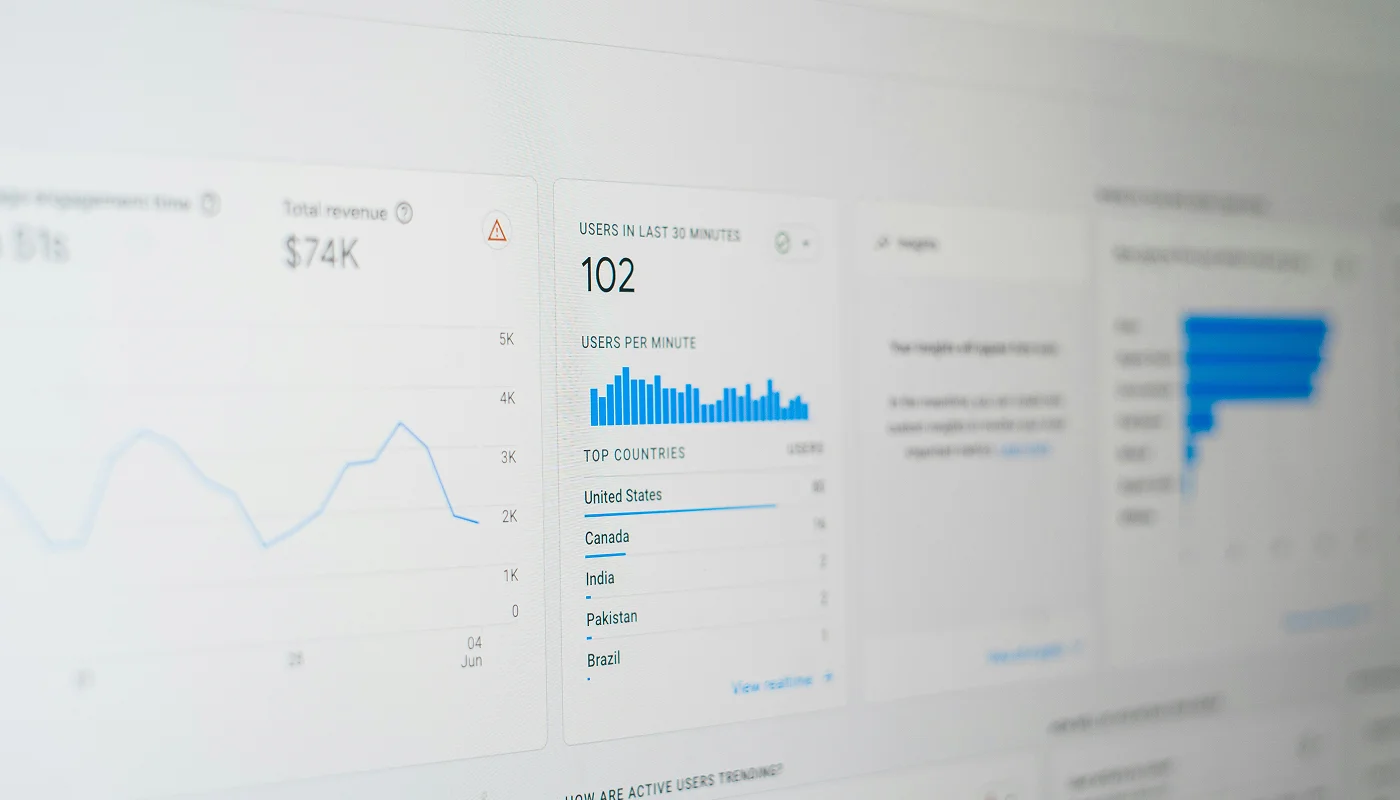
Traffic without a way to measure what happens next is just a number. Before you pour more effort into any of the channels above, make sure you can see what people do once they land on your site: which pages keep them there, which ones they bounce straight off, and, most importantly, which visits actually turn into an enquiry or a sale.
Set up goal or conversion tracking in GA4 for the actions that matter most to your business like a form submission, an email or phone number click, an item added to basket. Then review the data regularly, monthly is usually enough for a smaller business, and let it steer where you focus next. If a particular blog post is quietly bringing in steady traffic but no enquiries, that’s a sign the content needs a stronger call to action, not necessarily more content like it. If a page gets almost no visits at all, that may point back to the keyword research, content quality, or technical basics we covered earlier.
How Long Will This Actually Take?
Realistically, technical fixes and paid advertising can shift your numbers within days or weeks. SEO and content are a different story, where you should expect to see the first meaningful movement in organic rankings and enquiries somewhere between three and six months, longer in more competitive industries, and treat anything promising overnight results with real suspicion.
That’s not a reason to avoid it. It’s a reason to start now rather than in six months’ time, and to measure progress against the specific goal you set at the start, rather than against how quickly you’d like it to happen.
Increase Website Traffic: Frequently Asked Questions
Do blogs actually increase website traffic?
Yes, but only when they’re built around genuine search demand. A blog post that directly answers a question your customers are already typing into Google, and answers it more clearly than what’s currently ranking, can bring in visitors for years after you publish it. A post that exists purely to “keep the site fresh” rarely earns any organic traffic at all. The difference comes down to research before writing, not writing more often.
Does more website traffic improve my Google ranking?
Not directly. Traffic itself isn’t one of Google’s ranking factors, so more visitors doesn’t automatically push you higher up the results. What traffic can influence indirectly is engagement. If people who land on your page stay, read, and don’t immediately bounce back to Google, that’s a positive signal about how well your page matches what they were searching for. Better content earns the ranking and therefore traffic, rather than traffic creating the ranking.
What’s the fastest way to increase website traffic?
Paid advertising and fixing obvious technical issues, like a slow-loading site or broken pages, tend to show results fastest, often within days or weeks. SEO and content marketing take longer to build momentum, usually three to six months for the first meaningful movement, but the traffic they bring in keeps arriving without an ongoing cost per click. Most businesses get the best results from doing both at once as part of a combined marketing effort.
How can I increase website traffic through social media?
Pick one or two platforms your actual customers use, rather than trying to maintain a presence everywhere. Share content with a clear reason to click through, a specific insight, a useful stat, or a real result, rather than just dropping a link with no context. LinkedIn tends to work best for B2B audiences, whilst Facebook groups and local community pages often outperform for consumer-facing local businesses. Consistency matters more than frequency, so a steady presence on one platform can often beat a sporadic burst of activity.
Ready to Build a Proper Traffic Strategy?
Every tactic in this guide works better as part of a joined-up marketing strategy, rather than as a one-off tick-box exercise. If you’d like an honest look at where your website stands and which of these levers would move the needle fastest for your business, that’s exactly the conversation we have with clients every week.
Get in touch and we’ll talk through what’s realistic for your business, no jargon, no hard sell. Take a look at our full range of digital marketing services to see how it all fits together.