

Generative Engine Optimisation (GEO): Future-Proof Your Business for AI-Powered Search
Definiton: Generative Engine Optimisation, or GEO, is the discipline of making your business visible and credible in AI-powered search engines. If SEO was about optimising for Google’s algorithms to appear on the first page of results, GEO is about optimising for AI models that decide which businesses, products, or experts they cite in their answers.
Search has changed forever.
For more than two decades, businesses fought to rank on the first page of Google, relying on traditional SEO strategies like keywords, backlinks, and technical optimisation to earn those coveted blue links. But today, users rarely scroll, click, or even leave the results page. Artificial Intelligence has fundamentally transformed how information is discovered and consumed. Google’s AI Overview, ChatGPT Search, and Microsoft Copilot don’t simply list pages — they deliver answers. The difference is monumental: instead of ten possible links for a user to explore, AI assistants usually cite one or two trusted sources as “the answer.”
That’s where Generative Engine Optimisation (GEO) comes in. GEO is the new discipline of ensuring your brand becomes the chosen source in AI-powered search results. Instead of competing for visibility on a crowded page, you position yourself as the authority that AI trusts to respond to user queries. GEO represents the natural evolution of SEO, and businesses that adapt early will gain an advantage as the search landscape shifts.
In addition to explaining what GEO is in this white paper, we are also going to show you why it matters, how it works, and how your business can implement it today. Think of it as your roadmap through the disruption AI is bringing to digital marketing. If you’ve relied on SEO to bring customers to your website, GEO is the logical,and urgent next step.
Inside, you’ll learn:
- Why Google’s AI Overview, ChatGPT, and other AI tools are reducing organic traffic.
- How GEO differs from traditional SEO and why the distinction is critical.
- The exact methods that help AI systems understand, trust, and promote your business.
- Practical steps to future-proof your marketing strategy in the era of AI-powered search.
The old way of searching online is dying
The businesses that thrive in this new landscape will not be those who cling to the old ways. They will be the businesses that adapt, invest early, and secure their place as the trusted answer AI provides to millions of daily searchers. GEO is no longer optional, it is the foundation of visibility in a world where AI filters, interprets, and delivers information before the user ever sees a results page.
This is not just another marketing trend. It is a revolution in how people find and choose businesses. You can either fight for a shrinking share of organic clicks or take action to ensure you are chosen first by AI. This whitepaper will show you how.
An introduction to Generative Engine Optimisation (GEO)
GEO is about optimising your website and business for AI models that decide which serivces, products, or experts they cite in their answers. In practical terms, GEO ensures that when someone asks Google, ChatGPT, Perplexity.ai or Microsoft Copilot for products or services you provide, your brand is the one highlighted in the AI’s response.
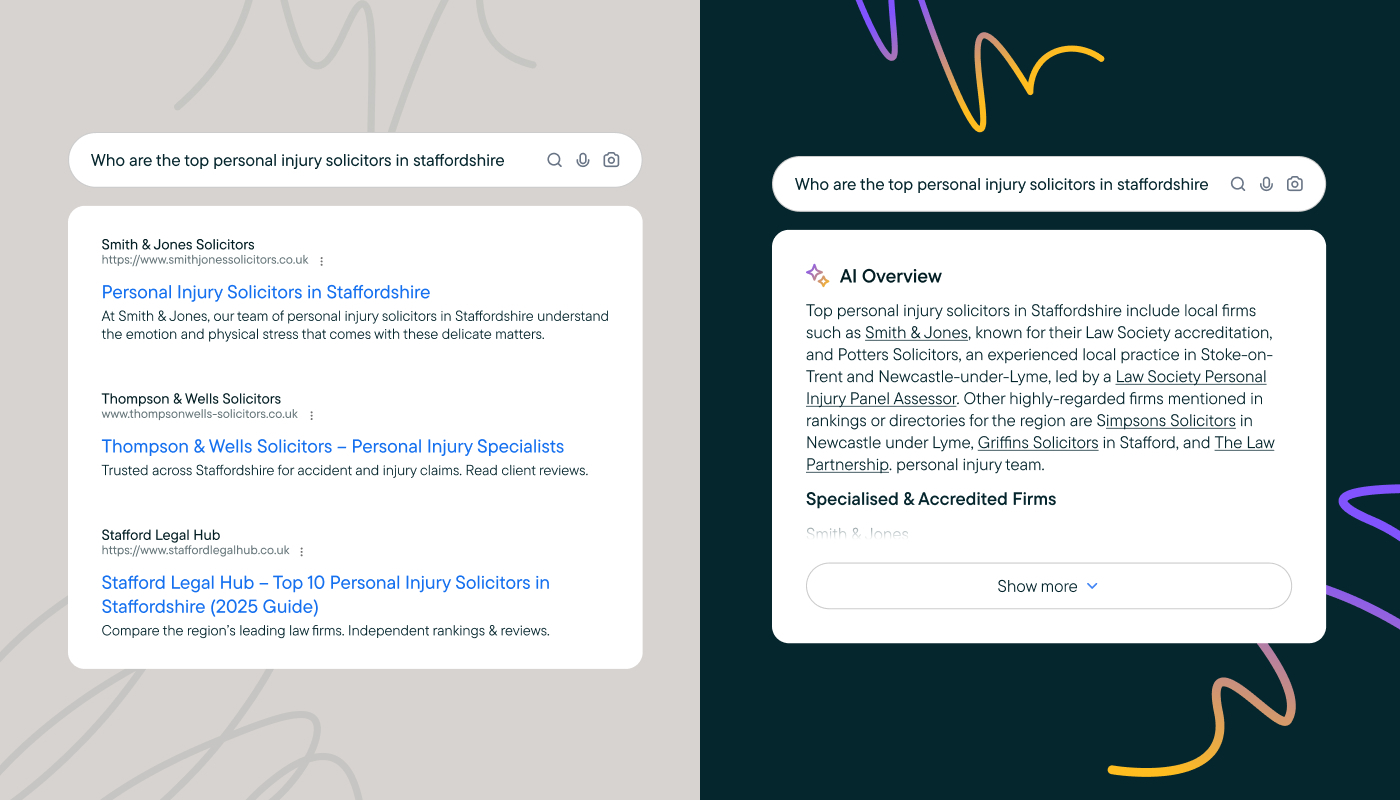
The shift to AI-driven search has been fast and disruptive. When someone types a query into Google today, they often don’t see a list of links at the top. Instead, they’re presented with an AI Overview; a machine-generated summary of the best possible answer, accompanied by one or two citations and links to relevant websites. In ChatGPT or Copilot, the user rarely sees a full search results page at all. They ask, the AI responds, and the session ends there. In this new ecosystem, being chosen is far more valuable than being listed.
Why does this matter for businesses?
Because search remains the most common way people discover products, services, and information. Google alone handles over 8.5 billion searches per day. Studies show that AI Overviews now appear in 13–30% of those searches, and that number is climbing. Users trust these summaries — often more than the underlying results. Research also shows that organic click-through rates decline dramatically when AI Overviews are present, with many users never scrolling down to see traditional links.
In this environment, businesses that continue to rely only on SEO risk losing visibility. It’s not enough to optimise content for keywords and backlinks. Instead, businesses must communicate credibility, authority, and clarity in ways AI can understand and evaluate. GEO involves structuring your content, highlighting expertise, and reinforcing trust signals so that AI recognises your brand as the most reliable answer.
Is SEO Dead then?
Absolutely not! This is not a replacement for SEO. GEO builds upon the foundation SEO provides. You still need to rank in traditional search results, as AI models often draw from those same sources (as well as other places like review sites, reddit, discord and social media). However, GEO requires additional steps: writing content that directly answers natural language questions, implementing structured data so AI systems can interpret meaning, and consistently reinforcing authority through signals like reviews, case studies, and media mentions.
Think of SEO as entering the race. GEO is crossing the finish line. Both matter, but only GEO positions your business as the AI’s preferred choice.
For local businesses, GEO is equally important. Whether someone asks, “What’s the best café near me?” or “Which solicitor is recommended for small business law?”, AI systems increasingly supply the answer. By implementing GEO now, you ensure your business is visible not just in 2025 but in the years ahead as AI adoption accelerates.
In the following sections, we’ll break down how GEO works in practice, how it differs from SEO, and the strategies you can use to stay ahead of the curve.
SEO vs GEO: Understanding the Shift
The Changing Nature of Search
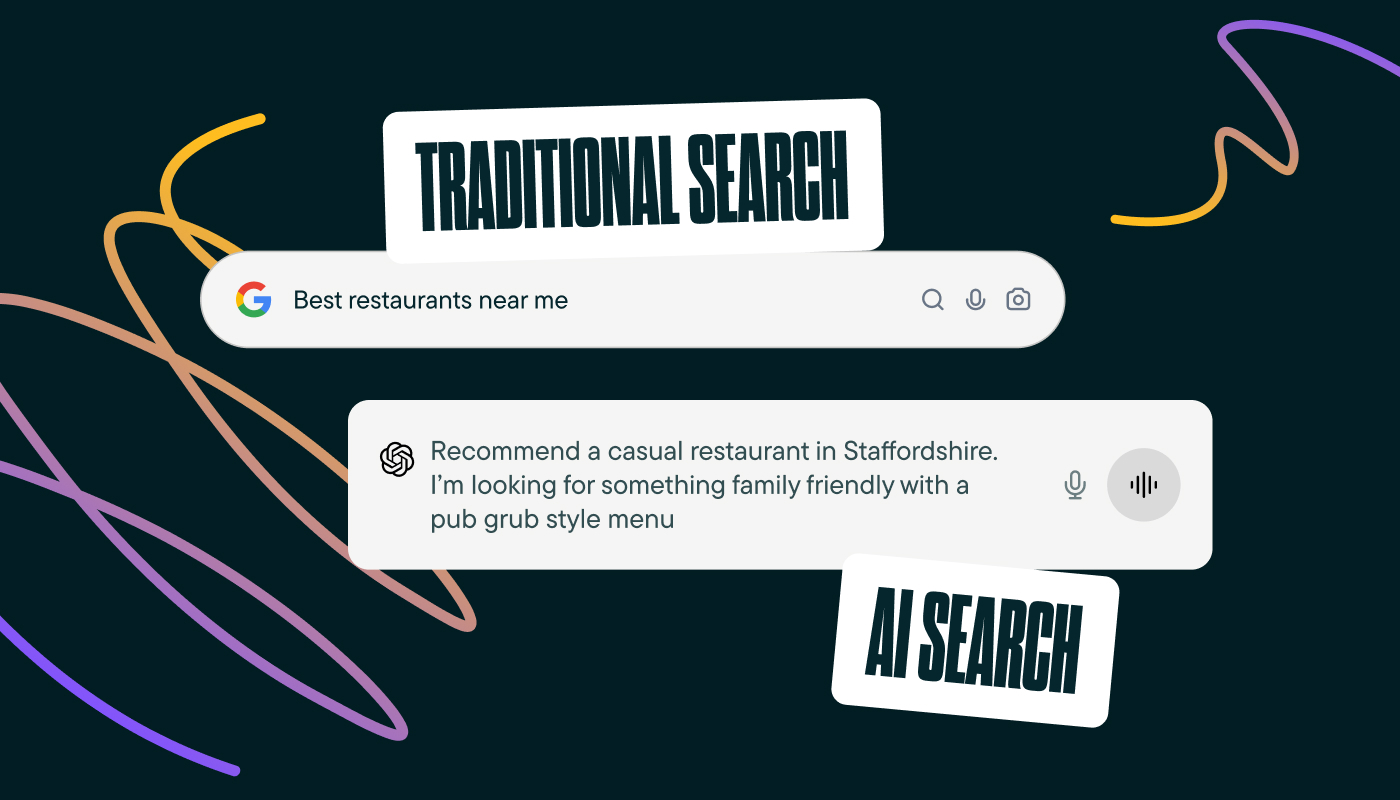
For nearly two decades, digital marketers were trained to focus on search engine optimisation as the bedrock of visibility. SEO was about making sure Google and other search engines recognised your content, ranked it well, and displayed it on the coveted first page of results. That meant optimising meta titles, building backlinks, and crafting content around carefully researched keywords. But the rise of generative AI has fundamentally reshaped this paradigm. When users type or speak a query into search engines like Google or Bing today, they increasingly see an AI-generated result first, rather than a familiar stack of blue links. Similarly, when they turn to ChatGPT, Perplexity, or Microsoft Copilot, they don’t receive a list of links at all, they get a neatly prepared and highly relevant answer that pulls from different sources across the internet.
SEO Rankings vs. GEO Selection
The distinction between SEO and GEO is subtle but profound. SEO ensures you appear in the race; GEO ensures you cross the finish line first. With SEO, you can be one of many businesses that show up on page one, leaving it to the user to scroll, skim, and decide which result to trust. GEO is far more exclusive. When an AI engine selects a single business to include in its generated response, it is placing that brand in a position of implicit authority. For example, SEMrush analysis of Perplexity queries shows that the engine often cites a handful of sources but frames one as the definitive answer. The same occurs with Google’s AI Overview, which may list dozens of potential results but elevate only two or three within the generated summary.
Practical Implications for Businesses
The implications are clear: competing for SEO rankings alone is no longer enough. You must adapt your strategy to become a source that AI systems not only recognise but actively prefer. That preference is based on trust signals — consistency of brand association, clarity of explanation, and authority across multiple platforms. Businesses that once celebrated appearing in position five on Google’s first page will find little comfort if users never scroll past the AI overview. In the GEO era, inclusion in the AI-generated answer is worth more than any traditional ranking position.
Mindset Shifts in Marketing Teams
Forrester’s research on AI adoption emphasises that one of the biggest barriers to success is not the technology itself but the human mindset surrounding it. Many marketing teams still think in terms of keyword rankings and SERP positions. To succeed with GEO, organisations must retrain their teams to think in terms of being referenced. This is not about chasing a number one spot but about being woven into the very answers that AI assistants deliver. That requires new metrics, such as tracking how often your content is cited in ChatGPT or how frequently your brand appears in Perplexity answers.
The Competitive Edge of Early Adoption
Right now, many businesses are slow to adopt this thinking. They still allocate budgets purely to SEO while AI quietly eats into their visibility. This creates a rare window of opportunity. By adopting GEO strategies early, you can establish your business as the “default answer” in your industry before competitors wake up to the shift. Just as early SEO adopters dominated search visibility for years, early GEO adopters will hold the same advantage in AI-powered search.

How GEO Works in Practice
Teaching AI to Understand Your Business
Generative engines are not search engines in the traditional sense. They don’t simply crawl pages, index keywords, and rank results; they synthesise answers from what they determine are the most reliable, clear, trustworthy and accessible sources. That means your business must not only exist online but exist in a form that AI systems can easily interpret. This requires clarity, structure, and repetition across multiple channels.
Why Structure and Accessibility Matter
SEMrush research shows that many AI crawlers still struggle with complex client-side rendering, meaning that sites relying heavily on JavaScript may not be fully visible to AI models. Server-side rendering or simplified structures improve accessibility, ensuring your site’s content is captured, processed, and considered. This mirrors Forrester’s finding that technology must be aligned with human usability: just as employees reject AI systems they don’t understand, AI engines skip over content they cannot easily parse. The goal is the same — remove friction and present information in ways that can be digested smoothly.
The Role of Trust Signals
Being included in an AI-generated answer is not random. Generative engines tend to prefer content that demonstrates authority. Studies have shown that content featuring quotes, statistics, and credible references is significantly more likely to be selected. This aligns with the human tendency to trust evidence-backed material and reinforces the idea that what persuades people also persuades machines. GEO requires you to embed these trust signals consistently across your website and other digital assets.
Beyond Keywords: The Broader Digital Presence
Traditional SEO was largely site-centric. GEO, however, requires businesses to extend their digital presence far beyond their own domain. Generative AI draws heavily from community-driven platforms such as Reddit, YouTube, and Wikipedia. SEMrush notes that even unlinked mentions of a brand can influence AI-generated responses, because these systems are designed to synthesise sentiment and association rather than rely solely on hyperlinks. That means brand discussions, reviews, and contributions to public platforms all become part of your GEO footprint.
Continuous Monitoring and Refinement
Unlike the slower evolution of traditional SEO algorithms, generative engines are evolving at speed. Google is constantly refining AI Overviews, OpenAI continues to update ChatGPT, and Perplexity introduces new features every month. To succeed, businesses cannot treat GEO as a one-time optimisation exercise. It must be monitored and adjusted continuously, with dedicated effort to track AI visibility metrics and refine content in line with what these engines prioritise.

Strategies for GEO Success
Content Consistency and Authority
The first step in any GEO strategy is to build a consistent body of content around the themes most relevant to your business. AI systems look for patterns, and the more your brand is associated with a particular subject, the more likely it is to be included in generated answers. This doesn’t mean producing thin or repetitive content. It means creating a deep library of articles, guides, case studies, and resources that establish your business as the go-to authority.
Freshness and Relevance
AI-powered engines prioritise current information. Outdated or static pages are less likely to be used. Businesses must therefore update their content regularly, not just for human readers but for AI credibility. Freshness sends a signal that your brand is actively engaged in its field. In practice, this means revisiting cornerstone content, updating statistics, and ensuring your material reflects the latest developments in your industry.
Expanding Into Multiple Platforms
Generative engines synthesise from the broader internet, not just websites. User-generated content platforms like Reddit, Quora, YouTube, and LinkedIn are increasingly influential. If people are discussing your brand or if your team is contributing valuable expertise in these spaces, AI systems are more likely to cite you. Wikipedia plays a unique role here as well, since it is frequently embedded in AI training datasets. A well-maintained Wikipedia entry, while not a guarantee, increases the odds of being surfaced in AI responses.
Aligning With Human-Centric Adoption
The Forrester research reminds us that visibility is not just about algorithms — it is also about people. Employees and content creators must embrace GEO practices for them to succeed. If your internal teams continue to optimise only for keyword rankings, you will fall behind. Training staff to think about clarity, trust, and authority in everything they publish ensures your GEO strategy becomes part of the company culture rather than a separate project. In this sense, GEO is as much a cultural shift as it is a technical one.
The Payoff of Early Investment
The businesses that adopt these strategies early will dominate tomorrow’s search landscape. When AI assistants answer questions about your industry, your brand should be part of the conversation. The return is not just in traffic but in authority. Being cited as the definitive answer by AI is the new gold standard of credibility in digital marketing.

Why GEO Matters Now
The Scale of the Opportunity
The numbers behind the rise of generative search are staggering. Google’s AI Overviews now appear in over 13% of searches. With 8.5 billion searches happening on Google daily, that represents well over a billion queries each day being answered, at least in part, by generative AI. Meanwhile, ChatGPT surpassed 100 million active users faster than any application in history. Perplexity and Claude are seeing rapid adoption among both consumers and professionals. This isn’t a future trend; it is already here, and businesses that ignore it risk losing visibility at scale.
Visibility and Credibility Intertwined
Being selected in an AI-generated answer is not just about exposure. It is about endorsement. When a generative engine chooses your business as part of its output, it is presenting you as a trusted solution to the user’s question. That implicit recommendation is powerful. Studies show that users trust AI-generated summaries in the same way they once trusted Google’s top organic results. This means appearing in an AI Overview or ChatGPT answer is not only more visible but more persuasive than a traditional ranking.
The Human Side of Adoption
Here is where the Forrester insights are critical. Many organisations are underestimating the human factor in this transition. Employees and customers alike have questions, doubts, and concerns about AI. If businesses fail to frame GEO as part of a human-centric strategy, they risk pushback, misunderstanding, and poor execution. Just as AI adoption inside companies requires employee buy-in, GEO adoption in marketing requires stakeholder understanding. Framing it as an opportunity — a way to secure authority and visibility — helps overcome resistance and creates enthusiasm.
First-Mover Advantage in GEO
The current moment is unique because GEO is still in its infancy. Most competitors have yet to adapt, focusing instead on the comfort zone of SEO. This creates a rare first-mover advantage. By establishing a GEO strategy now, you not only gain immediate visibility but also embed your brand in the training data and association networks that AI systems use going forward. That visibility compounds, making it harder for late adopters to displace you.
Future-Proofing Your Digital Strategy
Ultimately, GEO matters now because it is about future-proofing. The search landscape of the past is fading, and those who cling to it risk invisibility. By embracing GEO today, you ensure your brand remains not just discoverable but chosen in the AI-driven ecosystem of tomorrow.

AI Search Optimisation: The Next Step Above SEO
Search Engine Optimisation (SEO) has been the backbone of digital marketing for decades. It ensured that when someone searched for a relevant keyword, your website had a chance of appearing in the top results. But SEO was fundamentally about competition. If you made it to page one, you were one among many. Users had to scan through multiple results, compare offerings, and decide which site to click. GEO flips this paradigm on its head.
Generative Engine Optimisation is not about being one result among many — it’s about being the single result AI chooses to highlight. When a user searches today, they are less likely to browse a list and more likely to accept the AI-generated answer as authoritative. This means businesses are no longer competing for rankings but for selection. The difference may sound subtle, but its impact is seismic.
Consider the query: “Who are the best accountants for small businesses?” In the SEO era, your firm might appear somewhere on page one, buried among nine other links. The user would still need to decide which to trust. In the GEO era, the AI might generate a summary that reads: “Smith & Co are highly rated for small business accounting.” Your firm is not just listed; it’s endorsed by the AI.
This endorsement effect is powerful. Users trust AI-curated answers more than random search results. Being highlighted as the chosen answer instantly positions your business as the authority. It reduces friction in the decision-making process, increases click-through likelihood, and builds credibility that traditional SEO alone cannot provide.
The technical difference lies in how AI search functions. While traditional search engines index and rank pages based on relevance and backlinks, AI search engines synthesise information. They combine training data with live web results, then generate a human-readable summary. This summary is where GEO comes in: your goal is to ensure your content is cited, quoted, or referenced by the AI when it builds its answer.
This is why GEO requires different tactics from SEO. You need content that aligns with natural language prompts, not just short-tail keywords. You need to ensure your site uses structured data (Schema.org, FAQ markup) so AI systems can parse and validate it. You need authority signals — credible reviews, case studies, media mentions — that reinforce trustworthiness. And you need to adapt continuously as AI search evolves.
SEO is still relevant — but GEO is the next step above it. Together, they create a dual strategy: SEO to secure visibility across traditional search engines, and GEO to secure authority within AI-driven responses. Businesses that invest in both will dominate the next decade of digital discovery.
What We Do: Translating Businesses for AI
Most websites today are written for humans and optimised for Google’s crawlers. That worked well in the age of SEO. But AI systems interpret information differently. They don’t just crawl and index; they summarise, synthesise, and select. If your content isn’t structured in a way that AI can understand and trust, you risk being invisible in this new landscape. That’s where our role comes in.
We specialise in translating businesses into a language AI can interpret. This doesn’t mean filling your site with technical jargon or machine-like text. Quite the opposite. It means writing clear, structured content that directly answers questions, highlights expertise, and provides the trust signals AI algorithms seek out.
For example, AI models are trained to reward clarity and authority. If your website buries key information under vague marketing language, the AI may overlook you. But if your site presents a straightforward explanation of what you do, why you’re credible, and how you’ve helped customers, the AI is far more likely to cite you as a trusted source.
Our process involves auditing your website for AI readability. We identify areas where the structure can be improved — such as breaking content into question-and-answer formats, adding FAQ sections, and implementing schema markup. We highlight your credibility by showcasing reviews, certifications, case studies, and thought leadership. And we ensure your site is semantically clear so AI systems can confidently interpret and represent your business.
This translation process goes beyond on-page SEO. It includes strengthening your presence across the digital ecosystem. AI models draw from structured data, media mentions, social proof, and external citations. That means your business must be visible not only on your website but in trusted third-party contexts. We help position your brand across these ecosystems so AI systems consistently encounter and reinforce your authority.
In short, what we do is prepare your business for the new reality. We help you speak not just to customers but to the AI engines that increasingly mediate customer discovery. By doing so, we ensure your business is not skipped over but selected, cited, and showcased as the answer.
How We Help: Our GEO Approach
Our approach to Generative Engine Optimisation is structured, systematic, and designed for long-term impact. GEO is not a one-off tactic. It is an ongoing strategy that evolves alongside AI-powered search. Here’s how we help businesses future-proof their visibility.
We begin with an Audit & Assessment. This involves analysing your website to see how well AI systems can interpret it. We check whether your content is clear, structured, and aligned with the types of questions your customers actually ask. We look at your use of schema markup, FAQs, and trust signals. We evaluate your presence across external platforms like media outlets, directories, and Wikipedia. This audit gives us a baseline of how AI currently perceives your brand.
Next, we move into Content Optimisation. Traditional SEO emphasised keywords; GEO requires natural language answers. We restructure and rewrite content to reflect the way people ask questions in AI search. We create detailed, authoritative resources that AI systems can cite. We ensure your site speaks clearly, presents expertise, and demonstrates credibility. This stage often includes adding new sections, expanding FAQs, and showcasing expertise through case studies and data.
We then enhance your Authority Signals. AI engines favour trustworthy businesses. That means surfacing your experience, reviews, testimonials, awards, and results. We help highlight proof points that make AI confident in selecting your brand. This might involve strengthening review visibility, publishing thought leadership, or aligning with authoritative industry sources.
Finally, we provide Ongoing Monitoring. AI search is still evolving. Google continues to adjust its AI Overviews, OpenAI refines ChatGPT search, and Microsoft is advancing Copilot integration. Staying visible is not about a one-time project — it’s about continuously adapting. We track changes in how AI presents results, monitor your brand mentions in AI systems, and adjust strategies to keep you ahead of competitors.
Our methodology is designed to give you both immediate visibility and long-term resilience. In an age where AI dictates who gets seen and who gets ignored, our role is to make sure you are always in the first category: chosen, cited, and trusted.
Why GEO Matters for Your Business
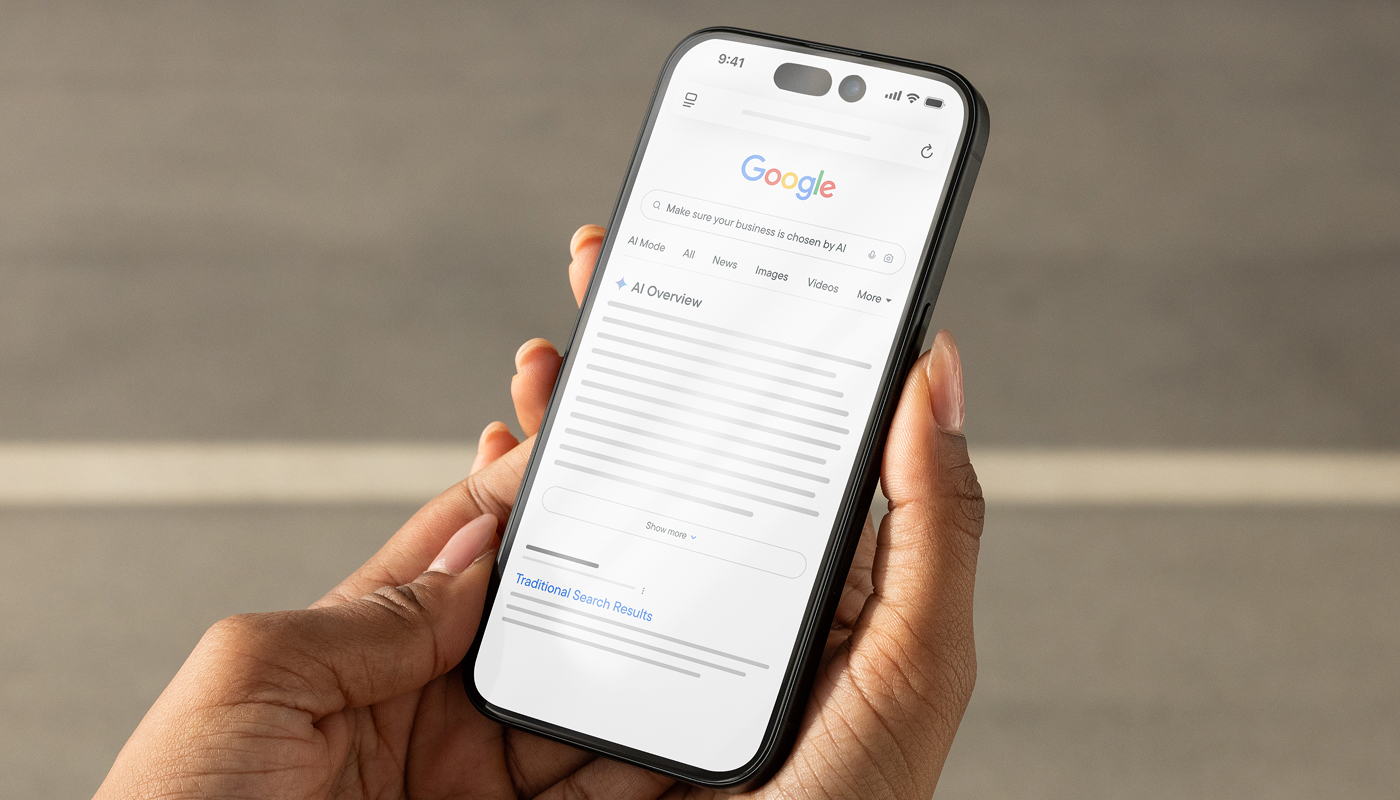
Search behaviour is changing faster than most businesses realise. In 2024, Google began rolling out AI Overviews, and within months, studies showed they appeared in 13–30% of searches. That percentage is growing every quarter. With over 8.5 billion daily searches, this translates to billions of opportunities where users now see an AI summary before they ever reach traditional results.
This has profound implications. If your business is included in an AI Overview or cited by ChatGPT, you gain instant credibility. You’re not just visible — you’re endorsed as the answer. This dramatically increases the likelihood of clicks, calls, and conversions. On the other hand, if you’re not cited, you risk losing visibility entirely. Many users will never scroll past the AI summary.
Research confirms the impact. Organic traffic is already declining across industries. Gartner predicts a 50% decrease in organic search traffic by 2028. Seer Interactive has found businesses already seeing drops of up to 40% in certain verticals. For businesses built on SEO-driven leads, this trend is existential.
The opportunity, however, is enormous. Because GEO is still new, most businesses have not adapted. That means there is a rare first-mover advantage. By investing in GEO now, you can secure positions of trust and visibility before competitors even understand what’s happening. Being one of the first businesses chosen by AI systems establishes authority that compounds over time.
Moreover, AI search is expanding beyond information into commerce. Soon, AI shopping assistants will play a central role in how people choose products and services. Businesses already optimised for GEO will be the ones these assistants recommend first. Whether you’re a local café, a law firm, or an e-commerce brand, GEO ensures AI not only knows who you are but prefers you as the answer.
For your business, this is the difference between being invisible in the new search ecosystem or being the go-to choice customers see first. GEO is not just about clicks; it’s about credibility, trust, and survival in the AI age.

What We Do: Translating Businesses for AI
Most websites today are written for humans and optimised for Google’s crawlers. That worked well in the age of SEO. But AI systems interpret information differently. They don’t just crawl and index; they summarise, synthesise, and select. If your content isn’t structured in a way that AI can understand and trust, you risk being invisible in this new landscape. That’s where our role comes in.
We specialise in translating businesses into a language AI can interpret. This doesn’t mean filling your site with technical jargon or machine-like text. Quite the opposite. It means writing clear, structured content that directly answers questions, highlights expertise, and provides the trust signals AI algorithms seek out.
For example, AI models are trained to reward clarity and authority. If your website buries key information under vague marketing language, the AI may overlook you. But if your site presents a straightforward explanation of what you do, why you’re credible, and how you’ve helped customers, the AI is far more likely to cite you as a trusted source.
Our process involves auditing your website for AI readability. We identify areas where the structure can be improved — such as breaking content into question-and-answer formats, adding FAQ sections, and implementing schema markup. We highlight your credibility by showcasing reviews, certifications, case studies, and thought leadership. And we ensure your site is semantically clear so AI systems can confidently interpret and represent your business.
This translation process goes beyond on-page SEO. It includes strengthening your presence across the digital ecosystem. AI models draw from structured data, media mentions, social proof, and external citations. That means your business must be visible not only on your website but in trusted third-party contexts. We help position your brand across these ecosystems so AI systems consistently encounter and reinforce your authority.
In short, what we do is prepare your business for the new reality. We help you speak not just to customers but to the AI engines that increasingly mediate customer discovery. By doing so, we ensure your business is not skipped over but selected, cited, and showcased as the answer.

FAQs About Generative Engine Optimisation (GEO) + Call to Action
Frequently Asked Questions
Q: What exactly is Generative Engine Optimisation (GEO)?
Generative Engine Optimisation, often shortened to GEO, is the practice of making sure your business is not just visible in search engines but actively chosen by AI-powered search assistants like Google’s AI Overview, ChatGPT, Microsoft Copilot, and Perplexity. In the past, being on page one of Google was the goal — today, that’s no longer enough. When AI generates an answer, it synthesises the “best” response and typically features only one or two trusted businesses. GEO ensures that your website, brand, and expertise are aligned with the signals these generative engines use to decide which sources deserve to be cited. Instead of being buried among ten blue links, your business becomes the highlighted solution that users see first.
Q: How is GEO different from SEO?
While SEO (Search Engine Optimisation) is still essential, it focuses on climbing the rankings of traditional search results. You might appear fifth on Google and celebrate that visibility, but if an AI Overview answers the query before the user ever scrolls, that ranking has far less impact. GEO (Generative Engine Optimisation) changes the rules. It ensures that AI not only notices your content but selects it as part of its response. SEO gets you listed; GEO gets you featured. Another way to put it is that SEO enters you into the competition, but GEO positions you as the clear winner in the new world of AI search optimisation.
Q: Do I still need SEO if I invest in GEO?
Absolutely. Think of SEO as the foundation of your online visibility and GEO as the next level built upon it. Without SEO, your website may lack the technical health, keyword targeting, and domain authority that AI engines use as trust signals. However, without GEO, you risk being overlooked by generative systems that prioritise clarity, relevance, and credibility across a broader set of platforms — including Wikipedia, YouTube, Reddit, and news sources. Businesses that combine SEO and GEO SEO strategies are not only visible in traditional search but also positioned to be cited by the next generation of AI-driven tools.
Q: Can GEO work for local businesses as well as national ones?
Yes, and in many cases local businesses have the most to gain. Whether you’re a solicitor in Manchester, an accountant in Birmingham, a café in Bristol, or a retailer in Glasgow, customers are already asking AI tools for nearby recommendations. When someone types “best local solicitor near me” into Google or asks ChatGPT, the AI will generate an answer that may only include one or two businesses. By using GEO, you increase the chances that your business is chosen as the authoritative local recommendation. Local reviews, customer testimonials, and community presence are all trust factors that GEO amplifies, making it particularly effective for businesses that depend on local traffic.
Q: Isn’t GEO too new to invest in right now?
That’s exactly why now is the time to act. SEMrush data shows that search volumes for terms like “generative engine optimisation” and “AI search optimisation” are growing rapidly, but most businesses haven’t adapted their strategies yet. This creates a first-mover advantage. By investing in GEO today, you can establish authority while competition is still relatively low. As Forrester’s research highlights, businesses that fail to adapt early often struggle to catch up once adoption becomes mainstream. GEO isn’t a passing trend — it’s a reflection of how search itself is evolving. Waiting means ceding ground to competitors who are already positioning themselves to be the default answer AI tools recommend.
Don’t Just Get Found. Get Chosen.
Search has changed forever. The blue links that once defined SEO are no longer the final destination for users. AI-driven answers now dominate the top of search results, and the businesses being cited there are the ones customers trust, click, and convert with. Relying on SEO alone is no longer enough to guarantee visibility. GEO is your competitive edge in the age of AI search.
If you want your business to be the one recommended by Google AI Overviews, ChatGPT, Microsoft Copilot, and other AI engines, the time to act is now. Early adopters will secure long-lasting authority, while late adopters risk being invisible.